Water is all around us. Water is inside all of us. It nourishes all forms of life, and it carries all sorts of materials around the Earth. Remember the Suez Canal obstruction that caused major global supply chain failure during the pandemic in 2021? Do you know what is carried by water in this kind of cargo ship to the Port of Amsterdam? On the other hand, water cares for us, and we cannot live without water; how can we, in return, care for water?
In the project S+T+ARTS 4 WATER II, Waag Futurelab has hosted two art-science residencies that answer these two questions in poetic and innovative ways and help you experience water stories in embodied senses. These two projects also act as bridges between people. They bring together different groups in society to talk about innovation and environmental issues on a human level, and they help connect scientific and technological institutions and their research with the wider public.
What does water carry?
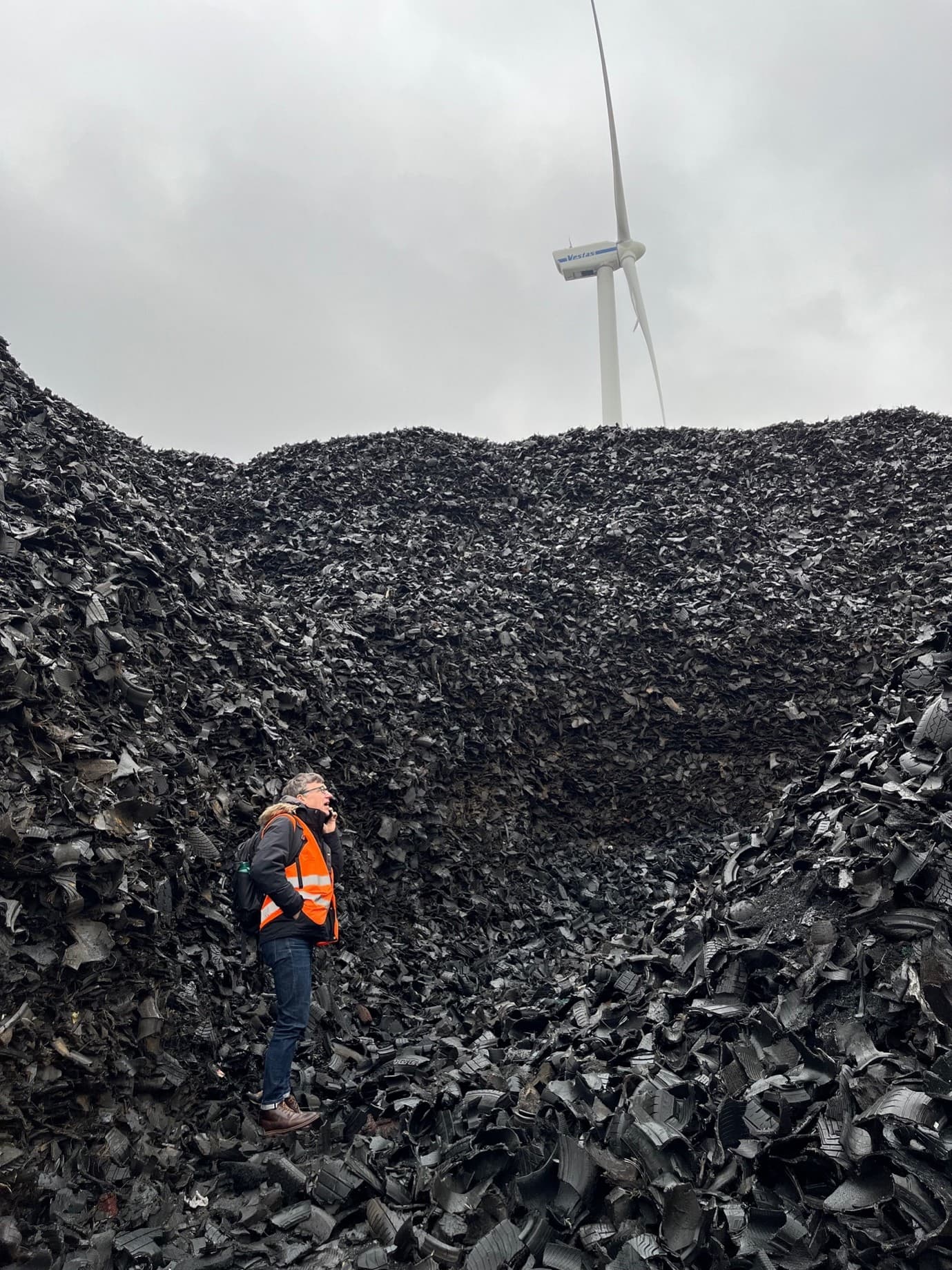
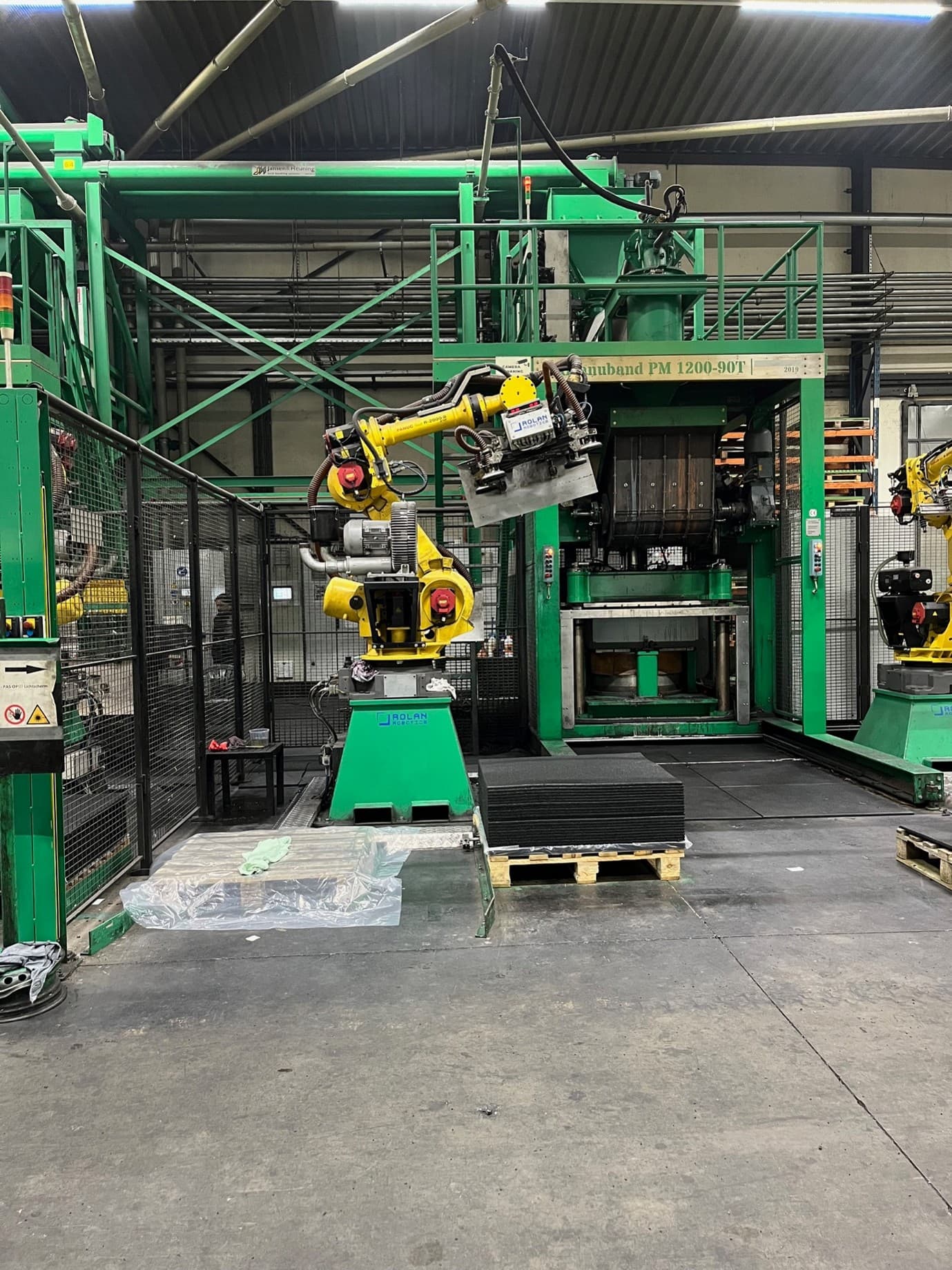
The residency of artist Michael Pinsky has looked into the connections between material flows, cargo routes and sustainability at the Port of Amsterdam. It was co-funded by, and partnered with the Port of Amsterdam. His journey into the Port led to a waste tyre recycling company, where he discovered the waste trade routes between Iceland and the Netherlands, leading to the heart of Amsterdam. With Waag's art-science researcher Zeynep Birsel's mentoring and mediation, and tremendous network support from the Port of Amsterdam, Michael gained access to the tyre recycling company Granuband. In his research, he found out that all used tyres from Iceland end up at the Port of Amsterdam, and the exporters pay this company so that their waste tyres can be recycled. He went to the sites where tyres are stored, dismantled and shredded into small pieces, and the production site where they are processed and transformed into new materials such as tiles for playgrounds or bicycle lanes.
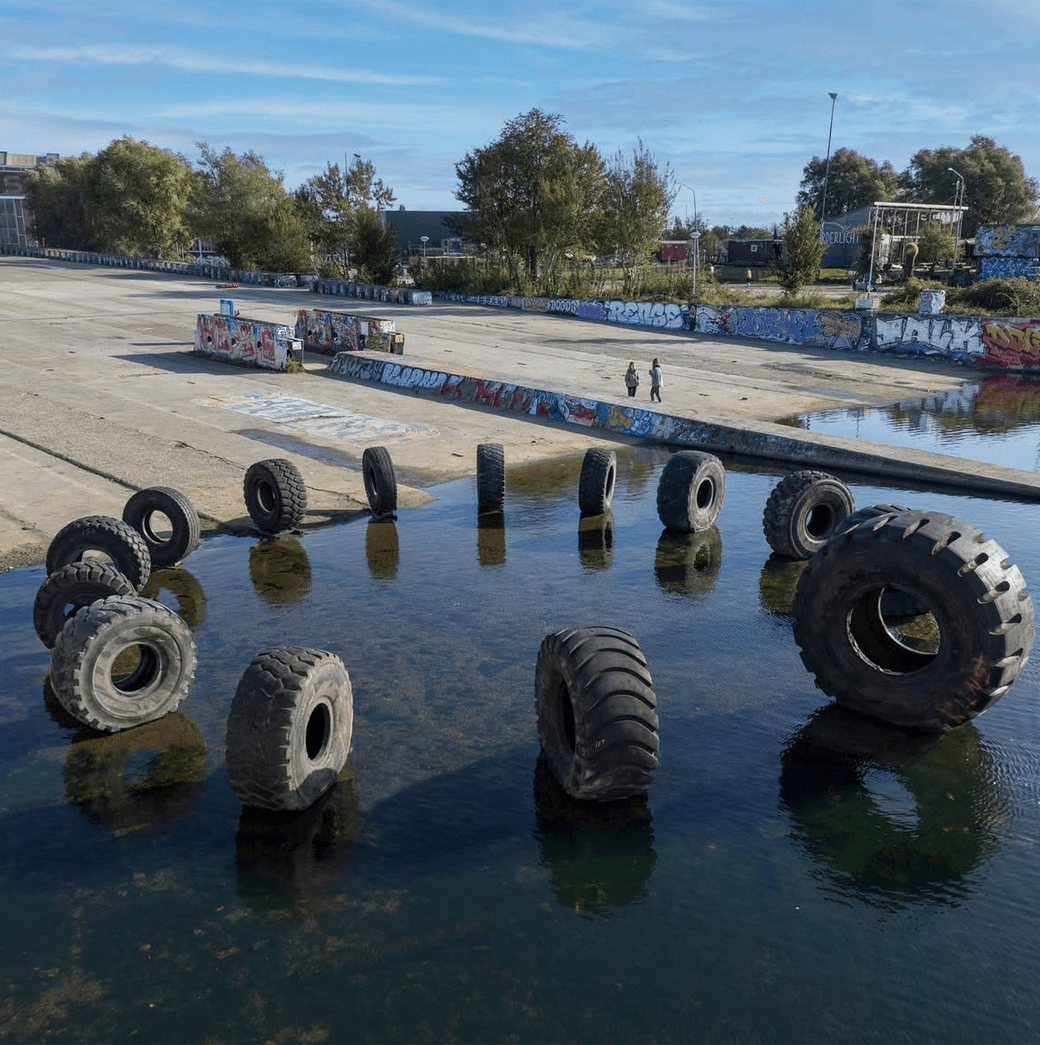
In his large-scale sculpture project All the Tyres from Iceland (2025), in a poetic way, Pinsky took some of the tyres out of the recycling circle momentarily, forming different circles in the shallow water of the NDSM Shipyard slope. In the first installation, 14 old tyres, from relatively small to very large, form a big circle. The biggest tyres are 2.8 meters tall. The circle is 12 meters in diameter. Mirrored in water, the sculpture evokes a sense of stillness in the movements of wind and water, in contrast to the mobility that tyre usually enables. The monumental quality of this sculpture gestures to the large quantity and volume of tyres that are retired and recycled, and the economic value of each piece contributing to circularity, which are often unseen or intangible.
The second sculpture is several intersecting circles, one inside another: the biggest tyre holds a smaller one, which is placed perpendicularly inside it. Gradually, each inner circle carries another smaller tyre, and this process repeats. Both sculptures in circular form can be seen as a metaphor of the material circles we are part of: they are not outside of or parallel to each other, but intersecting and interconnecting. Micheal Pinsky is very interested in "negative value" of waste: the price paid for discarding used materials as waste, which means a repurposed version or new product starts with a negative value in price or cost. In this sense, waste is a reflection of the product, just like the mirroring of the tyres on water are reflections of the used tyres’ old journeys and new journeys that are yet to come. And waste does have costs, not just in monetary terms, but mainly in planetary health and the well-being of all beings. In case of the heavy load-bearing tyres like the big ones in these two installations, each of them requires 20-25kg of natural rubber, which will need 200 – 250 m2 of cultivated land to produce. Think of where the rubber comes from, as the rubber plantation is deeply rooted in colonialism and deforestation, and where does it go and what does it become? As for tyres mainly made from synthetic rubber, this artificial elastomer is made from crude oil. The industrial extraction, production, and use of petroleum has destroyed many ecosystems and turned a lot of societies into highly energy consuming and dependent ones, releasing a huge number of greenhouse gases that push the Earth-Gaia out of her balance.
Both sculptures echo the questions that previous Waag’s projects have been probing into, such as Fairphone, Local Color and collaborations like Anatomy of an AI System, have been probing into: where do the materials come from, how are they processed, and what do they become? And where are we in these material flows, what roles do we play?
In many material flows, water is present and essential. Think of the roles of water in mining, in industrial fabrication of clothes, and in shipping as the majority of all materials humans use are transported over water. Water is vital, but do we think that water is actually alive? If so, how do we care for water, as water is caring and vital for us?
Water cares for us, and can we care for water?
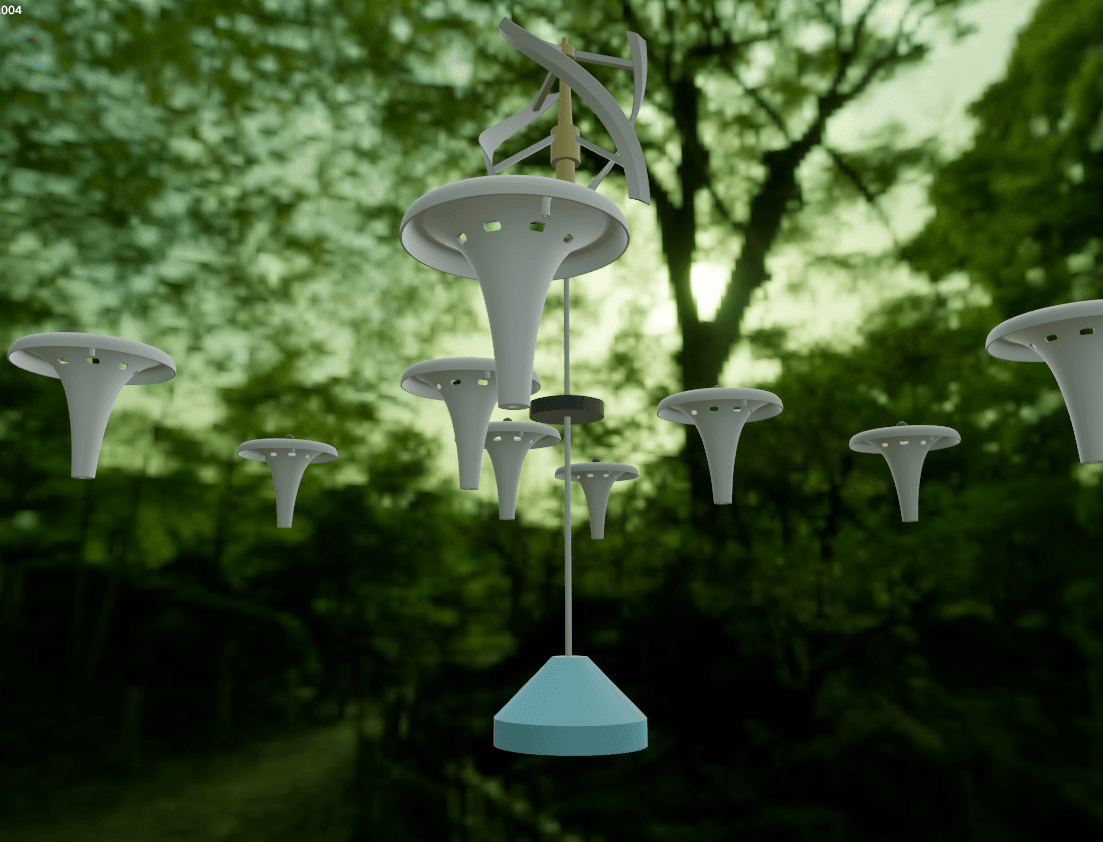
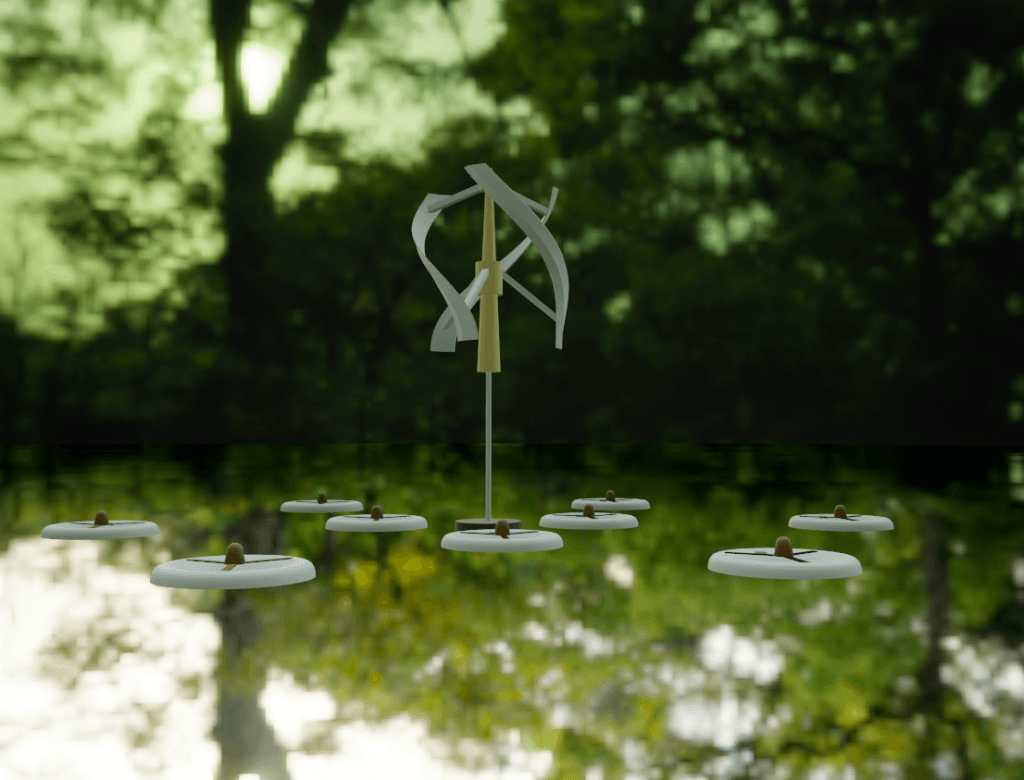
The project Vortex Harmonies (2025), of the other artist-in-residency Arcangelo Constantini', is a sound-light installation that reoxygenates water and thus cares for water. The project is inspired by Viktor Schauberger's vortex-based water revitalisation. Schauberger learned from rivers and found out that vortices, the spiral-vortical motion of water happens in rivers naturally, thereby reoxygenating water. Constantini's Vortex Harmonies is a modular kinetic installation composed of nine floating hyperbolic cones. Each cone houses a Tesla pump system that generates a micro vortex, creating visible water movements and audible acoustics. Powered by solar energy, these floating megaphones funnel water for the Tesla pump system, "organised according to the numerical structure 3–6–9, the modules act as a distributed sonic network, creating a spatialized resonance field where sound, light, and water motion are deeply interconnected”, the artist explains.
With the mentorship and mediation of Waag's curator and researcher Maro Pebo, the artist worked with Wetsus, the European centre of excellence for sustainable water technology in Leeuwarden, the Society for Promotion of Natural Technology (PKS) in Austria and Waterschap De Dommel, the governing body of the river Dommel in the south-east of the Netherlands. In a horizontal collaboration between Arcangelo and the scientists and engineers in these organisations, they listened to and inspired each other in the process of building the work, how the vortex would function, and how the artwork would be composed aesthetically.
In Vortex Harmonies, there are nine vortices—at the outside, it's a hexagon with six, and inside there are three in a triangle. Each vortex has a number. (See the above image of a vortex-generating Tesla pump and megaphone) The outside numbers are 1, 2, 4, 5, 7 and 8, and inside are the 9, 3, 6, which is drawn from vortex maths that some think to have connection to mystical spirituality. Activated by wind, the Tesla turbines generate vortices. A neodymium speaker is positioned at the centre of the megaphone-shaped funnel’s rim, facing the vortex. Each module emits a base frequency whose harmonics evolve in real time, modulated by sensor data capturing the living dynamics of the vortex, such as a specific water flow rate or intensity of the vortex. Each funnel also has a red light, which is vibrating to the vortex’s frequency.
At the opening of the exhibition on 23 October 2025, the grandson of Viktor Schauberger expressed that he was glad to see his grandfather’s philosophy manifested in this artwork in the Dommel river. Viktor Schauberger criticised the “nature-alienated science” of his time in 20th century and he believed that water as a living being, “the blood of Mother-Earth", which was to some extent close to the Gaia theory. Gaia theory proposes that “all organisms and their inorganic surroundings on Earth are closely integrated to form a single and self-regulating complex system, maintaining the conditions for life on the planet”. Using the name of the primordia Greek goddess of Earth, this theory also tries to “restore an emotional connection with a living planet”.
This installation intertwines vortex, sound, light, and electromagnetic field to care for water by reoxygenating it, re-enacting the wisdom of the river. The vortex is shifting and changing some harmonics in the frequencies, triggered by the movement of the river that is processed by a sensor. So, the river is the conductor of the harmonics. This art work is a good reminder for us to treat rivers and ecosystems as living and intelligent beings that have many ways to regenerate themselves, and human beings, who are nurtured by all the beings including rivers, can learn a lot from them on how to take care of them and at the same time, ourselves.
While All the Tyres from Iceland makes the cycles of material flows carried by water and economic value transformations enabled by port activities visible in poetic and monumental sculptures, Vortex Harmonies cares for the living water by reoxygenating it through vortex, and lets the agency of the river conduct the sound-light harmonics that are palpable and unpalpable to humans.
What do these art-science projects do to society and science?
Both All the Tyres from Iceland and Vortex Harmonies act as connectors. They help bring together different people, types of knowledge, organisations, and even non-human beings such as rivers, and support relationships between them.
The research and making of All the Tyres from Iceland have brought the Port of Amsterdam and the industries and companies they’re managing together on a human level. The relationship before was more straightforward and transactional - the Port checking rent and whether the companies meet the sustainability standards. Because of this project, the artist Michael Pinsky, Waag’s S+T+ARTS 4 Water II project lead Zeynep Birsel, and some members of the innovation team of the Port of Amsterdam went into Granuband’s recycling site of old tyres and the manufacturing site of new products, talking to the owners and workers there who even touched upon the pain points of the company. The art project gives warmth to the relationship, which might lead to better collaboration on circular port in the long run.
On the other hand, All the Tyres from Iceland was shown at NDSM shipyard, which is a popular spot for visitors from home and abroad. By December 2025, more than 17,000 people had experienced the artworks. The works connected visitors to the stories of water, tyres, the Port of Amsterdam, Granuband, and Waag. They sparked curiosity about what materials are, where they come from, what they might become, and how they move in different cycles - helping people see and relate to their environment in new ways. These stories and organisations have become parts of the cultural fabrics of Amsterdam.
Arcangelo Constantini’s Vortex Harmonies have connected the public to water in a caring relation that we can enact, perhaps not through making vortex, but in our own ways in daily life. This collaborative project has also brought the scientific research partner Wetsus in contact with the society, and making the rather complex technology of vortex experiential and comprehensible. In the collaboration with Waag, Wetsus is convinced of the unique role that artist can play in research as they bring in different ways of asking questions, point to the blind spots of the scientific research, and render complex things sensible in their artworks. That’s why they continue to be the science research partner of S+T+ARTS AQUA MOTION, the sequel of S+T+ARTS 4 Water II.
In a society that is compartmentalised and polarised, human to human connection is important to social resilience, which the project All the Tyres from Iceland has contributed to. Both project help people relate to water in more caring ways, and be more aware of circularity, which are needed in planetary resilience. Water carries, and water lives. So do society and planet. And a society can only live well if the planet is living well.